
Follicles, Friction, Flow
The images demonstrate the successful achievement of the science intent, as children consistently show curiosity and ask questions through hands-on investigations. This enables them to apply their knowledge of scientific concepts and evaluate their findings — from exploring water flow in EYFS to modelling blood components in Upper KS2.
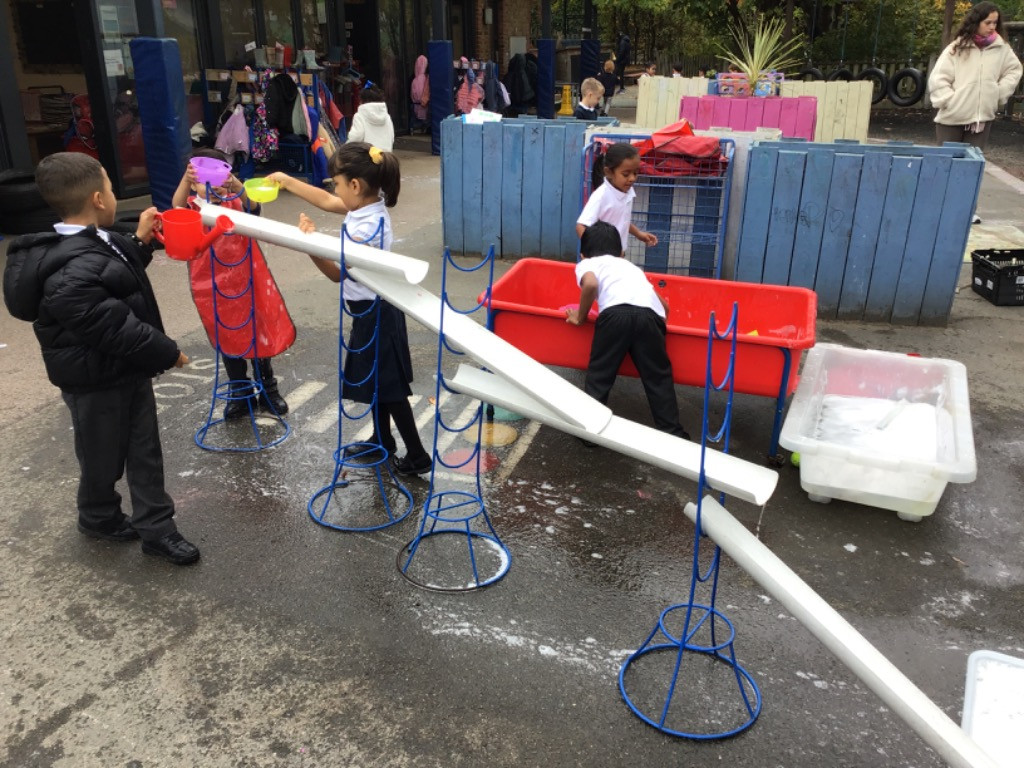
Pipeline to Knowledge - EYFS
In Reception, the children were having fun in the water trough. They used different objects and containers to pour and transfer water down the pipes and into the larger containers. They collaborated well together and enjoyed themselves. This activity shows their curiosity about the world and their ability to conduct investigations into concepts like flow, volume, and gravity through active, hands-on experimentation.
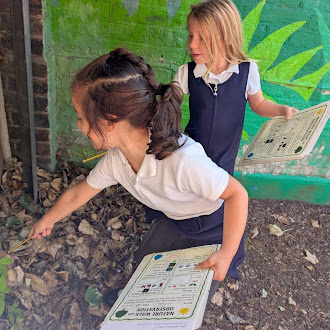
Exploring the Natural World - KS1
Year 1 went on a nature walk around the playground, using their senses to explore and discover the world around them. They listened carefully to hear birds singing, felt the wind on their skin, and observed a cat in the playground. This hands-on experience encouraged their curiosity, gave them opportunities to ask questions about what they noticed, and allowed them to begin investigating and understanding the natural environment, linking their observations to scientific concepts.
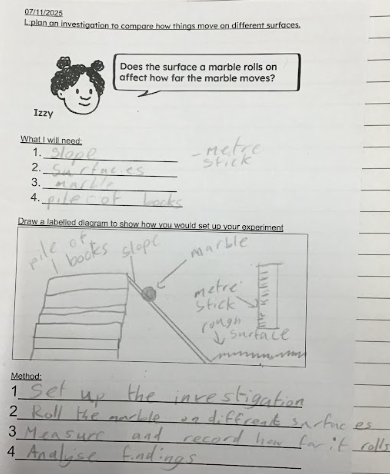
Scratching Below the Surface - LKS1
Year 3 conducted an investigation to compare how objects move on different surfaces. They showed curiosity by asking questions about how and why surfaces affect movement, then planned their investigation by selecting suitable equipment and explaining their method clearly. Through this enquiry, pupils applied their understanding of forces and friction to carry out fair tests and observe results carefully.
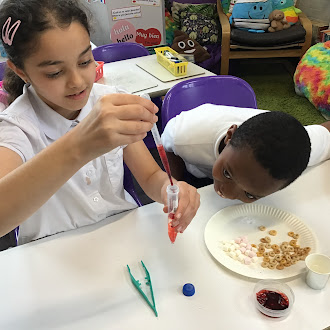
Experimenting: Learning’s Lifeblood - UKS2
After learning about the components of blood and the different types of blood vessels in the human body, Year 6 students became lab technicians to create their own model blood samples, using Cheerios for red blood cells, marshmallows for white blood cells, playdough for platelets, red food colouring for haemoglobin, and yellow food colouring for plasma. This hands-on activity allowed them to explore and visualise the function of each component, demonstrating curiosity about the human body, asking questions, and applying their scientific knowledge to investigate and evaluate their findings.